





 Salesforce ERP
 ERP + CRM Platform
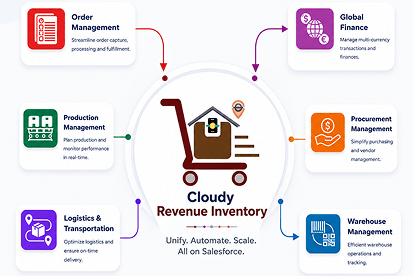
  Inventory Management
  Warehouse Management
  Order Management
  Vendor Management
  Logistics Management
  BOM Management
  Order Fulfillment
  Business Operations
  SaaS Platform for Operations
  Salesforce Cloud ERP Platform
  Xero
Xero
 Zoho books
 Quickbooks
 Shopify
 Acumatica
 SAP
SAP
 Odoo
Odoo
 NetSuite
 Microsoft Dynamics 365
 Sage
Sage



 Agentforce Revenue Management
 Agentforce Revenue Management + Billing
  Salesforce CPQ
 Salesforce Advanced Billing
  Migrate from CPQ to ARM
  Managed Services
 Salesforce Implementation
 Revenue Cloud Implementation
 ServiceNow Consulting Services
 Zoho CRM implementation
 MuleSoft Integration
 Workato Integration
 Microsoft
 Data Cloud
 Tableau
 Document Template
Document Template is the master template used for creating actual documents.It defines the structure, content, behavior, and workflow of documents, allowing users to generate consistent, branded, and legally compliant documents quickly.
How the Document Template Object Represents in Cloudy DocGen & Signer
The Document Template object represents a reusable document configuration that defines how business documents are created, formatted, delivered, and signed in Cloudy DocGen & Signer.
In the Cloudy DocGen & Signer UI, the object is presented through configuration areas such as Template Information, Page Settings, Header & Footer, Signer, Template Section, Layout Designer, General Setting, and Site Setting.
A Document Template connects a Salesforce business record, such as a Quote, Account, Contact, Opportunity, Case, or Order, with the document generation and signing process.
Why is it Used?
The Document Template object is used to configure reusable templates for generating consistent, professional business documents directly from Salesforce data.
It helps organizations:
- Generate documents from Salesforce records.
- Maintain consistent document formatting and branding.
- Define document page, header, footer, and layout settings.
- Configure eSignature and signer-related processes.
- Define signing order and expiration settings.
- Configure document-related email notifications and messages.
- Support customer-facing welcome, success, and failure experiences.
- Reduce manual document creation and formatting effort.
Key Features
📄 Reusable Document Templates
Create standardized document templates that can be reused across different Salesforce business processes.
🔗 Salesforce Data Integration
Generate documents using data from supported Salesforce objects, including Account, Quote, Contact, Opportunity, Case, and Order.
🎨 Document Formatting & Branding
Configure fonts, colors, page size, orientation, margins, padding, headers, and footers to maintain consistent document presentation.
🖥️ Layout Designer
Define the visual structure and positioning of document elements using the Layout Designer.
✍️ eSignature Configuration
Configure document templates to support electronic signing workflows.
👥 Signer & Signing Order
Define how multiple signers participate in the signing process and establish the required signing sequence.
⏳ Expiration & Reminders
Define document expiration periods and reminder timing for pending documents or signing requests.
📧 Email Communication
Configure email content and subjects for document creation, completion, expiration, rejection, and reminder events.
🌐 Public Document & Signing Experience
Configure public domain and site-level content for externally accessible document and signing experiences.
👋 Welcome Experience
Customize the welcome page heading, message, and footer presented to users before the document or signing experience.
✅ Success & Failure Handling
Define success and failure messages and redirect URLs based on the outcome of the document process.
🔄 Template Status Management
Manage the lifecycle of templates using Draft, Active, and Inactive statuses.
Key Field Functionality
| Field | Purpose |
| Document Template Name | Identifies the document template and provides its primary name. |
| Background Color | Defines the background color applied to the generated document. |
| Border | Defines border configuration and styling for document elements. |
| Color | Defines the default color used for document content and styling. |
| Default Select For Download All | Controls whether documents are selected by default when using the Download All functionality. |
| Default Site Settings? | Determines whether the template uses the default site settings. |
| Description | Provides a description of the template and its intended business use. |
| Document Reject Message | Defines the message displayed when a document is rejected. |
| Document Template Status | Displays the calculated status of the document template. |
| Email Notification on Completion | Controls whether an email notification is sent when the document or signing process is completed. |
| Email Notification on Creation | Controls whether an email notification is sent when a document is created. |
| Email Notification on Expiration | Controls whether an email notification is sent when a document expires. |
| Email Notification on Rejection | Controls whether an email notification is sent when a document is rejected. |
| Email Notification on Reminder | Controls whether reminder email notifications are sent for pending documents. |
| Email Template On Completed | Defines the email content sent when the document or signing process is completed. |
| Email Template On Completed Subject | Defines the subject line for completion notification emails. |
| Email Template On Creation | Defines the email content sent when a document is created. |
| Email Template On Creation Subject | Defines the subject line for document creation notification emails. |
| Email Template On Expiration | Defines the email content sent when a document or signing request expires. |
| Email Template On Expiration Subject | Defines the subject line for expiration notification emails. |
| Email Template On Rejection | Defines the email content sent when a document is rejected. |
| Email Template On Rejection Subject | Defines the subject line for rejection notification emails. |
| Email Template On Reminder | Defines the email content used for reminder notifications. |
| Email Template On Reminder Subject | Defines the subject line for reminder notification emails. |
| Enable Dynamic Sender | Enables the sender of document communications to be determined dynamically from Salesforce data. |
| Enable Redirect | Enables redirection to a configured URL as part of the document process. |
| Enable Signature | Enables electronic signature functionality for the document template. |
| Enable Success Message | Enables the display of a success message or success page after successful completion. |
| Enable Verification Code | Enables verification-code functionality for the document signing experience. |
| Enable Welcome Page? | Enables a welcome page before the document or signing experience begins. |
| Expire in (days) | Defines the number of days before the document or signing request expires. |
| Expiry Email Sent to All ? | Controls whether expiration notifications are sent to all applicable recipients. |
| Failure Message | Defines the message displayed when document generation or processing fails. |
| Fail Url | Specifies the URL where users are redirected when the document process fails. |
| File Name | Defines the name assigned to the generated document file. |
| Font Family | Specifies the font family used for document content. |
| Font Size | Defines the default font size used in the generated document. |
| Footer Display Type | Defines which pages display the document footer. |
| Footer size | Defines the size allocated for the document footer. |
| From Email Address | Specifies the email address used as the sender for document-related communications. |
| Header Display Type | Defines which pages display the document header. |
| Header Size | Defines the size allocated for the document header. |
| Layout Designer | Stores the layout configuration used to control the visual structure and positioning of document elements. |
| Margin | Defines the spacing between document content and the page edges. |
| Org Wide Email Address | Specifies the Salesforce organization-wide email address used for document communications. |
| Orientation | Defines whether the document is generated in Portrait or Landscape orientation. |
| Padding | Defines the internal spacing around document content. |
| Page Height | Defines the height of the generated document page. |
| Page Number Alignment | Defines the alignment of page numbers on the document. |
| Page Number Format | Defines the format used for document page numbering. |
| Page Size | Specifies the document page size, such as Letter, Legal, or A4. |
| Page Width | Defines the width of the generated document page. |
| Public Domain Site | Specifies the public site used for externally accessible document or signing experiences. |
| Public Domain Site URL | Defines the URL associated with the configured public domain site. |
| Related Object Name | Identifies the related Salesforce object associated with the template configuration. |
| Remind After (days) | Defines when a reminder should be sent for a pending document or signing request. |
| Repeat Page Number Each Page? | Controls whether page numbers are repeated on each page of the generated document. |
| Sender Field API Name | Identifies the Salesforce field used to determine the sender dynamically. |
| Show Page Numbers | Controls whether page numbers are displayed on generated documents. |
| Signing Order Type | Defines the sequence in which multiple signers complete the signing process. |
| Site Footer | Defines the footer content displayed on the document or signing site. |
| Site Header | Defines the header content displayed on the document or signing site. |
| Status | Indicates the current template lifecycle status: Draft, Active, or Inactive. |
| Success Message | Defines the message displayed after successful completion of the document or signing process. |
| Success Url | Specifies the URL where users are redirected after successful completion. |
| Target Object | Defines the Salesforce object used as the primary data source for document generation, such as Account, Quote, Contact, Opportunity, Case, or Order. |
| Welcome Page Footer | Defines the footer content displayed on the welcome page. |
| Welcome Page Header | Defines the heading displayed on the welcome page. |
| Welcome Page Message | Defines the main message or instructions displayed on the welcome page. |
| Sign Image Configuration | Defines the size of the signature image displayed in the document. Users can control the signature image size by specifying its width and height. The default signature image width is100 px and height is 50 px, with a maximum supported width and height of 200 px. |
| Capture Each Signature Separately | Allows users to control how multiple signature fields are handled when the same signer is assigned to multiple signature fields. When enabled, the signer can provide a separate signature for each signature field. When disabled, the same signature is applied to all signature fields assigned to that signer. |
Example Business Scenario
Scenario: Generate and Sign a Customer Quote
A sales team needs to generate professional customer quotes directly from Salesforce.
The administrator creates a Document Template and selects Quote as the Target Object. The template is configured with the required page size, orientation, fonts, branding, header, footer, and layout.
When a salesperson generates a document from a Quote record, Cloudy DocGen & Signer uses the configured template and Salesforce data to create the document.
The generated quote can then be sent through the configured eSignature workflow, allowing the required customer or internal signers to complete the signing process.
The template can also define the signing order, expiration period, reminders, email communication, welcome experience, success handling, and rejection messaging required for the business process.
Outcome:
Sales teams can generate consistent, Salesforce-powered quotes and send them for signature without manually creating documents or switching between separate document-generation and eSignature tools.
 SEE ALSO :
___👉Document Signer
___👉Document Template Creation