

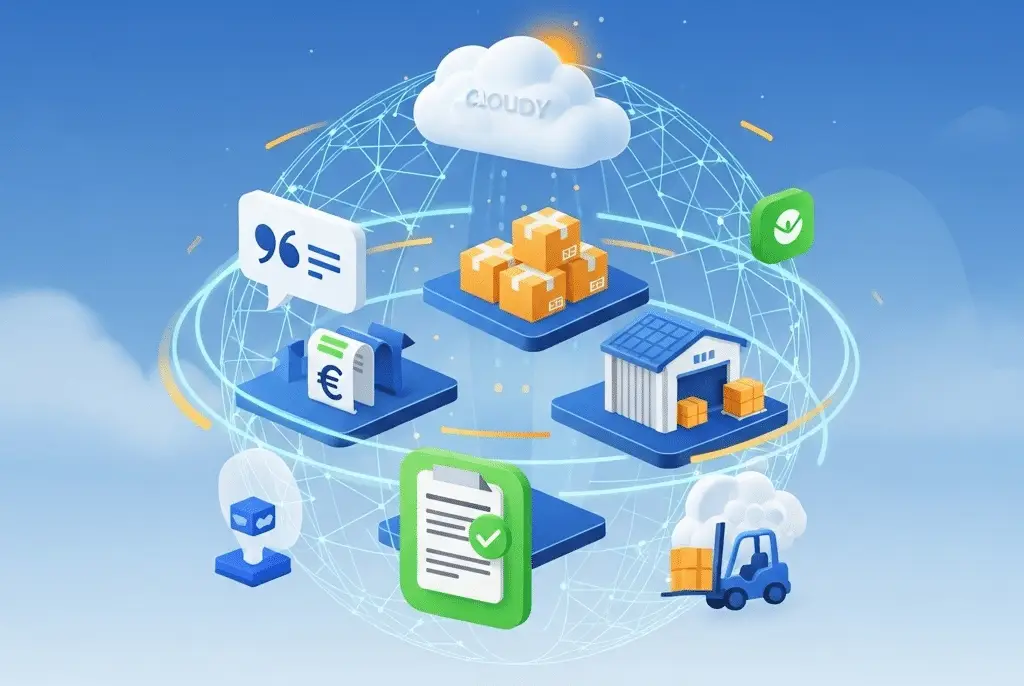
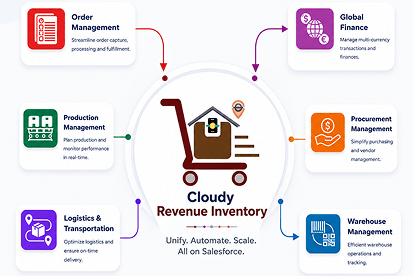



 Salesforce ERP
 ERP + CRM Platform
  Inventory Management
  Warehouse Management
  Order Management
  Vendor Management
  Logistics Management
  BOM Management
  Order Fulfillment
  Business Operations
  SaaS Platform for Operations
  Salesforce Cloud ERP Platform
  Xero
Xero
 Zoho books
 Quickbooks
 Shopify
 Acumatica
 SAP
SAP
 Odoo
Odoo
 NetSuite
 Microsoft Dynamics 365
 Sage
Sage



 Agentforce Revenue Management
 Agentforce Revenue Management + Billing
  Salesforce CPQ
 Salesforce Advanced Billing
  Migrate from CPQ to ARM
  Managed Services
 Salesforce Implementation
 Revenue Cloud Implementation
 ServiceNow Consulting Services
 Zoho CRM implementation
 MuleSoft Integration
 Workato Integration
 Microsoft
 Data Cloud
 Tableau
 Frequently Asked Questions (FAQs)
1. Pricing & Plans
What pricing plans are available for Cloudy DocGen & Signer?
Cloudy DocGen & Signer is available on the Salesforce AppExchange with flexible pricing tiers designed to fit teams of all sizes — from individual users generating occasional documents to enterprise teams running high-volume, multi-signer workflows. Contact the Cloudy Wave sales team or visit the AppExchange listing for current plan pricing and to arrange a trial.
Is there a free trial available on the AppExchange?
Yes. Cloudy DocGen & Signer is available through the Salesforce AppExchange, where a trial option is offered so you can explore the product within your own Salesforce org before committing. Contact the Cloudy Wave team to arrange a guided trial or personalized demo for your team.
Are there any hidden fees or customization charges?
The standard plan covers all listed features out of the box with no surprise charges. If your business requires bespoke workflows, custom branding extensions, or specialized integrations beyond the app’s configuration options, Cloudy Wave provides customization services scoped and quoted separately based on requirements.
2. Setup & Installation
What Salesforce editions does Cloudy DocGen & Signer support?
Cloudy DocGen & Signer requires Salesforce Enterprise, Unlimited, or Developer edition. It supports both Salesforce Classic and Lightning Experience. Browser compatibility covers the latest versions of Chrome, Firefox, Microsoft Edge, and Safari. A Salesforce System Administrator or AppExchange Download permission is required for installation.
Does setup require custom development or coding?
No custom development is required to get started. Cloudy DocGen & Signer is a fully configurable, out-of-the-box solution built natively on Salesforce. Admins configure everything through point-and-click Salesforce setup screens. If your team has unique workflow needs, Cloudy Wave offers optional customization services scoped separately.
3. Features & Templates
What types of documents can I generate with Cloudy DocGen & Signer?
Cloudy DocGen & Signer can generate any business document linked to a Salesforce record — including contracts, proposals, quotes, invoices, NDAs, onboarding agreements, service agreements, purchase orders, and custom forms. Because templates are linked to any Salesforce object (Account, Opportunity, Custom Object, etc.), the range of documents is limited only by your org’s data model.
What is the Canvas Workspace and how is it different from the Rich Text Editor?
The Rich Text Editor (RTE) is a standard word-processor-style editor supporting bold/italic/tables/images and dynamic Salesforce merge fields — ideal for text-heavy documents like contracts or proposals. The Canvas Workspace is an interactive drag-and-drop design area where you can freely position fields, images, checkboxes, radio buttons, and signature blocks anywhere on the page — ideal for visually precise layouts like branded cover pages, certificates, or forms.
Can I automatically pull live Salesforce data into a document?
Yes. Merge Fields automatically pull live data from the target Salesforce object and its related objects — traversing up to 5 levels of field hierarchy (e.g., Opportunity → Account → Owner → Name). Global Variables insert system values like today’s date, current user name, and organization details. Interactive Fields allow the document generator to adjust values like quantities or dates before the final document is produced.
Can I clone an existing document template?
Yes. The Clone Template feature creates a full duplicate of any existing template — copying all Content, Related List, and Canvas sections, layout design, merge fields, global variables, signer configurations, and formatting. The clone is named “Clone of [original name]” and set to Draft status by default, so you can safely modify it before activating. Note: if the Clone button is not visible for a Standard User, a System Administrator must enable the Flow User checkbox for that user in Setup.
4. eSignature & Signing
What signing order types does Cloudy DocGen & Signer support?
Ordered (Sequential): Signers receive the document one after another in a defined order. The next signer only receives it after the previous one signs.
Non-Ordered (Parallel): All signers receive the document at the same time and can sign in any sequence, independently of each other. Both modes support automated email notifications, reminders, and completion emails to all parties.
How does OTP verification work for signers?
When Enable Verification Code is activated on a template, each signer must complete an identity check before accessing the document. The signer clicks “Generate and Send OTP” on the signing page, receives a one-time code via email, enters it, and clicks “Verify and Proceed.” Only after successful verification can they view and sign the document. This adds a layer of identity assurance beyond the secure signing link alone.
How can I track signing progress in real time?
Two tracking views are available directly from Salesforce: the Document Signer Status tab on the Document Record object shows per-signer details, signing status, and time tracking. The Track Document Status tab on the target object page shows all document templates and their associated document records for that record. Status indicators include: Sent, Waiting, Signed, Expired, Cancelled, and Rejected — all updated in real time.
5. Security & Compliance
Is Cloudy DocGen & Signer enterprise-grade and secure?
Yes. Cloudy DocGen & Signer is built 100% natively on Salesforce, which means it inherits Salesforce’s world-class security infrastructure — including encryption at rest and in transit, role-based access control, permission sets, and sharing rules. All data stays inside your Salesforce org. As a certified AppExchange product, it has also passed Salesforce’s rigorous security review process.
Does my document data ever leave Salesforce?
No. Because Cloudy DocGen & Signer is 100% native to Salesforce, all document data, templates, signer records, and signed documents are stored directly within your Salesforce org. There is no middleware, no external API calls to a third-party document server, and no external storage — your existing Salesforce data residency, compliance, and security posture applies to all documents.
6. Integrations & Compatibility
Does Cloudy DocGen & Signer work with Salesforce Classic and Lightning?
Yes. Cloudy DocGen & Signer supports both Salesforce Classic and Lightning Experience. It is compatible with Enterprise, Unlimited, and Developer editions. The full document generation and signing UI is designed for Lightning, and all tracking views are available natively within Lightning Record Pages.
Can DocGen & Signer be used alongside Sales Cloud, Service Cloud, or other Salesforce products?
Yes. Because Cloudy DocGen & Signer is natively built on the Salesforce platform, it works seamlessly alongside Sales Cloud, Service Cloud, Experience Cloud, and any other Salesforce product in your org. Sales teams can generate and send contracts directly from Opportunities; service teams can generate documents from Cases — all without leaving Salesforce.
Can I generate documents from custom Salesforce objects?
Yes. During template creation, you select a Target Object — this can be any standard Salesforce object (Account, Opportunity, Contact, Quote, etc.) or any custom object in your org. The template then has access to all fields on that object, including lookup fields and related objects up to 5 levels deep, enabling highly dynamic and data-rich documents from any record.