






 Salesforce ERP
 ERP + CRM Platform
  Inventory Management
  Warehouse Management
  Order Management
  Vendor Management
  Logistics Management
  BOM Management
  Order Fulfillment
  Business Operations
  SaaS Platform for Operations
  Salesforce Cloud ERP Platform
  Xero
Xero
 Zoho books
 Quickbooks
 Shopify
 Acumatica
 SAP
SAP
 Odoo
Odoo
 NetSuite
 Microsoft Dynamics 365
 Sage
Sage



 Agentforce Revenue Management
 Agentforce Revenue Management + Billing
  Salesforce CPQ
 Salesforce Advanced Billing
  Migrate from CPQ to Agentforce Revenue Management
  Microsoft
 Data Cloud
 Tableau
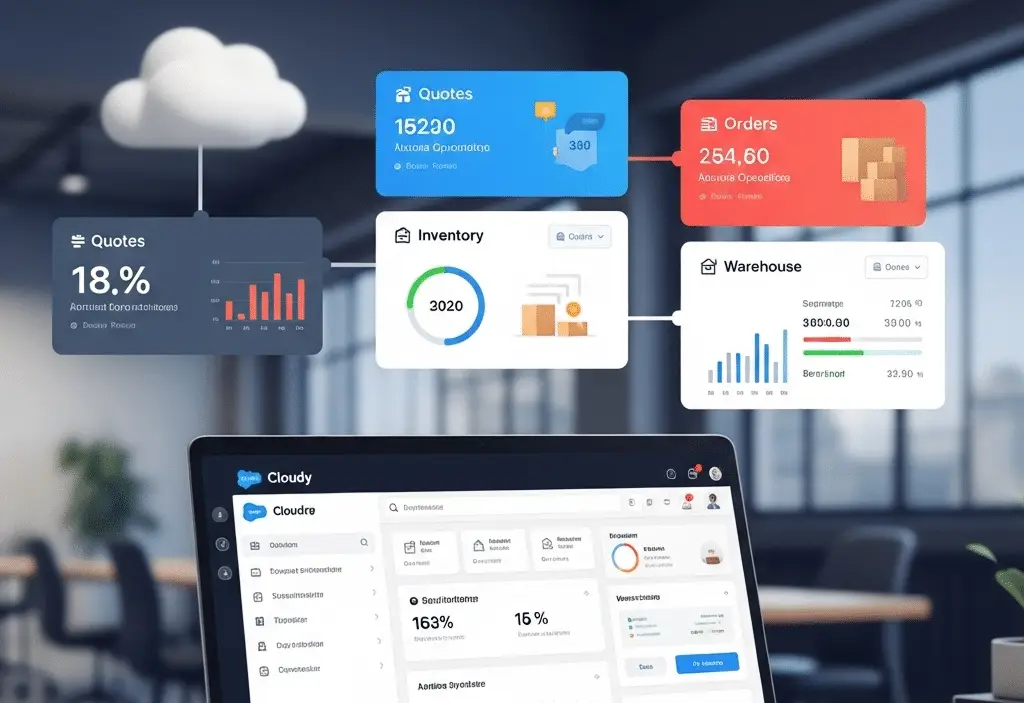
 Inventory Adjustment Creation Steps
Step 1: Navigate to Inventory
Open the Inventory tab and select the Inventory record that requires adjustment.
Step 2: Create Inventory Adjustment
Navigate to the Inventory Adjustments related tab and click New to create a new Inventory Adjustment record.
Step 3: Enter Adjustment Information
Provide the required details:
- Adjustment Date
- Inventory (Automatically populated from the selected Inventory record)
- Inventory Transaction (Select the related Inventory Transaction, if applicable)
- Type (Damage, Theft, or Other)
- Quantity Adjusted
- Available Despite Damage (Enable if the damaged inventory is still usable or saleable)
- Remarks / Notes
- Other Description (Required when Type = Other)
Step 4: Save the Inventory Adjustment
Click Save to create the Inventory Adjustment record.
Step 5: Inventory Updated
The system automatically:
- Creates the Inventory Adjustment record.
- Updates the corresponding Inventory quantities.
- Links the adjustment to the selected Inventory Transaction.
- Records the adjustment for audit history and reporting.
- Reflects the adjustment in Inventory and Warehouse reports.
Best Practices
- Record Inventory Adjustments immediately after identifying inventory discrepancies.
- Use the correct Adjustment Type (Damage, Theft, or Other) to improve reporting accuracy.
- Enable Available Despite Damage only when damaged inventory is still suitable for sale or internal use.
- Always provide clear Remarks/Notes explaining the reason for the adjustment.
- Link the adjustment to the correct Inventory Transaction to maintain a complete audit trail.
- Periodically review adjustment records to identify recurring inventory issues.
- Use Inventory Adjustment reports to monitor inventory losses and improve warehouse processes.
- Perform regular stock reconciliation to ensure inventory records match physical stock.
- Restrict adjustment permissions to authorized users to maintain data integrity.
- Review inventory adjustment trends to reduce future stock losses and improve operational efficiency.