Choosing between Agentforce and Microsoft Copilot is rarely a clean AI-vs-AI decision — it’s usually a question of which ecosystem your business already runs on, and how much that ecosystem is about to cost you once AI is layered on top. Salesforce and Microsoft have built two fundamentally different approaches to enterprise AI: Agentforce is a CRM-native autonomous agent platform bolted onto Service Cloud, Sales Cloud, and Data Cloud, while Microsoft Copilot is a productivity-and-platform play spanning Microsoft 365 apps, Copilot Studio, and Dynamics 365. This guide compares both platforms on pricing, security, integrations, implementation timelines, and industry fit — using only figures published by Salesforce, Microsoft, and independent analyst firms — so you can make a defensible recommendation instead of repeating vendor talking points.
What is Agentforce?
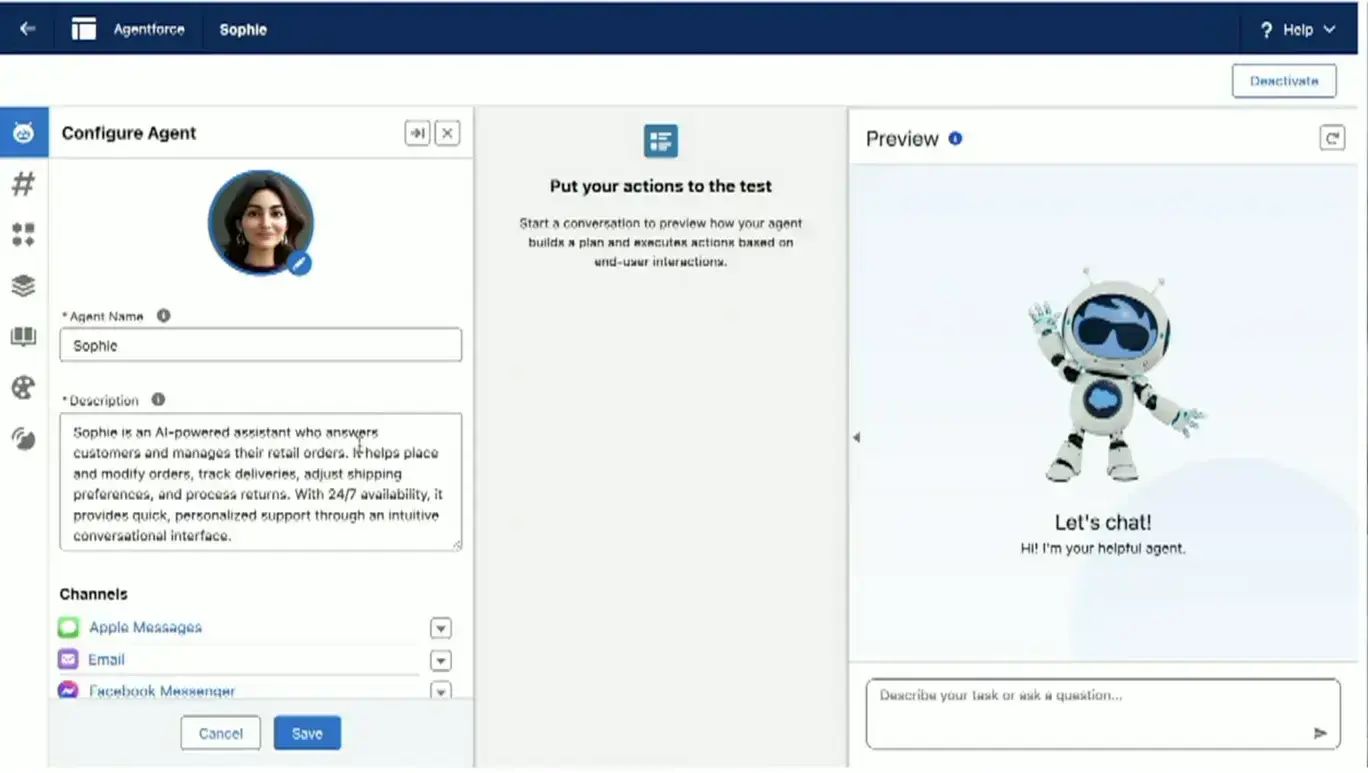
Agentforce is Salesforce’s platform for building and deploying autonomous AI agents that operate directly inside CRM data — Sales Cloud, Service Cloud, Data Cloud, and Slack — to take actions like resolving cases, qualifying leads, and updating records without constant human prompting. It runs on the Einstein Trust Layer for grounding and data protection, is configured through the low-code Agent Builder, and is licensed through three separate pricing models rather than a single flat fee.
Agentforce launched in 2024 as Salesforce’s answer to the shift from generative “copilot” assistants toward autonomous agents — systems that can complete a multi-step task (not just draft a response) using Salesforce’s existing object model, permissions, and workflows. Agents are built visually in Agent Builder, grounded in company data through Data Cloud, and governed by the Einstein Trust Layer, which handles prompt masking, zero data retention agreements with external model providers, and toxicity scoring before a response reaches an end user.
In Salesforce’s own worked examples, an Agentforce agent authenticating a customer and retrieving an order status consumes roughly 40 Flex Credits per interaction, while an internal Salesforce user asking an agent to manage a case consumes a comparable amount — Salesforce prices this consumption per action, not per message. This aligns cost with the value your AI agents create, since each action draws from a pool of Flex Credits rather than being billed by conversation length.
Independent implementation data suggests most Agentforce deployments take five to eleven months to reach production and require an existing Service Cloud license as a prerequisite, since Agentforce does not operate as a standalone product outside the Salesforce platform.
Agentforce channel and product coverage
Agentforce is generally available across web and in-app messaging, SMS, WhatsApp, Facebook Messenger, Apple Messages for Business, and email-to-case, with Agentforce Voice (native partners include Amazon Connect, Five9, Genesys, NiCE, and Vonage) reaching general availability in the US and Canada. Agentforce Contact Center reached general availability in early 2026.
What is Microsoft Copilot?
Microsoft Copilot is an umbrella brand covering generative AI across Microsoft 365 apps (Word, Excel, PowerPoint, Outlook, Teams), a standalone agent-building platform called Copilot Studio, and role-based AI add-ons for Dynamics 365 Sales and Service — unified by the same Microsoft Graph, Entra ID, and Azure OpenAI infrastructure rather than a single CRM data model. Unlike Agentforce, Copilot’s core value proposition starts in productivity apps and extends outward into CRM, rather than starting inside CRM.
Microsoft 365 Copilot is licensed at $30 per user per month on top of an existing Microsoft 365 E3, E5, Business Standard, or Business Premium subscription, and includes access to Copilot Chat, in-app AI across Office apps, and basic in-context agent building. For organizations that want to publish agents externally — to a website, a public-facing app, or a channel outside Microsoft 365 — Microsoft requires a standalone Copilot Studio license, billed through Copilot Credits.
For CRM-specific scenarios, Microsoft layers role-based Copilot add-ons on top of Dynamics 365: Copilot for Sales integrates with CRM systems to generate meeting summaries and deal insights linked to CRM records, and Copilot for Service supports customer service teams inside Dynamics 365. These are priced separately from the core M365 Copilot license and typically require an existing Dynamics 365 license.
Copilot Studio and the “agent economy”
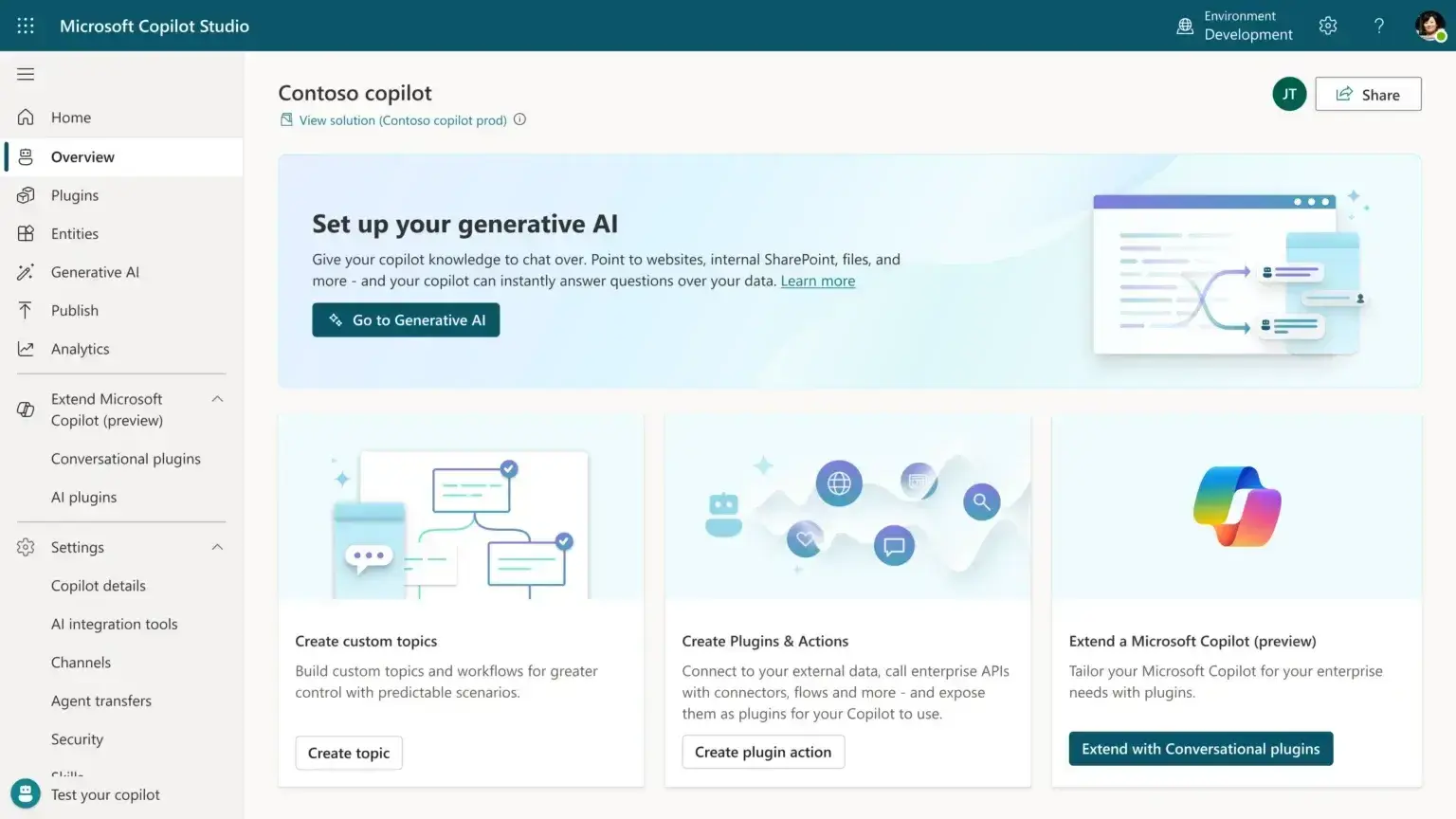
Copilot Studio is Microsoft’s low-code platform for building custom agents beyond what ships out of the box. It runs on Copilot Credits — a consumption unit priced at $200 per month for roughly 25,000 credits, or through Azure pay-as-you-go billing at approximately $0.01 per standard action and $0.02 per generative action. Microsoft’s own licensing guide confirms this credit system covers the Agent Economy — categories like Researcher, Analyst, Facilitator, Agent Builder, and Workflow agents — all metered separately from per-user seat licenses.
Quick Comparison Table
| Dimension | Agentforce (Salesforce) | Microsoft Copilot |
|---|
| Core architecture | CRM-native agents grounded in Salesforce Data Cloud | Productivity + agent platform grounded in Microsoft Graph & Azure OpenAI |
| Primary home base | Sales Cloud / Service Cloud / Data Cloud | Microsoft 365 apps / Copilot Studio / Dynamics 365 |
| Pricing model | $2/conversation, Flex Credits ($500/100K, ~$0.10/action), or per-user licenses from ~$5–$150/user/month | $30/user/month (M365 Copilot) + Copilot Studio credits ($200/25,000) + role-based Dynamics add-ons |
| Mandatory prerequisite | Service Cloud (and typically Data Cloud/Data 360 for advanced use cases) | Microsoft 365 E3/E5, Business Standard, or Business Premium |
| Free tier | Salesforce Foundations: 200,000 Flex Credits, Agent Builder, Prompt Builder on Enterprise Edition+ | Copilot Chat included free with M365; full Copilot Studio has no persistent free tier |
| Governance layer | Einstein Trust Layer | Microsoft Purview + Entra ID + Copilot Studio DLP controls |
| Typical implementation | 5–11 months for scaled deployment | Faster for core M365 use cases; longer for custom Copilot Studio agents |
| Best starting point | Existing Salesforce CRM customers | Existing Microsoft 365 / Dynamics 365 customers |
Feature-by-Feature Comparison
AI Capabilities
Both platforms combine generative AI (drafting, summarizing) with agentic AI (multi-step autonomous action), but Agentforce’s agents are built to act on CRM records by default, while Copilot’s agents are built to act across documents, email, and meetings by default, with CRM action requiring Dynamics 365 or a custom Copilot Studio build.
Agentforce agents reason over structured CRM data — cases, opportunities, orders — using Data Cloud as the grounding layer. Copilot’s reasoning agents (Researcher, Analyst, Facilitator) are positioned as general-purpose knowledge-work assistants that pull from Microsoft Graph content: emails, files, chats, and meetings, with an increasing ability to call third-party MCP-connected tools like Adobe, Monday.com, and Figma directly inside Copilot Chat.
Autonomous Agents
Agentforce ships with a library of over 300 prebuilt agent templates spanning industries, according to Gartner’s evaluation for its 2026 Magic Quadrant for Conversational AI Platforms, which credited Salesforce’s industry-specific coverage — including a dedicated Agentforce Health offering — as a competitive strength. Copilot’s autonomous capability is split across named reasoning agents (Researcher, Analyst, Facilitator) built into M365 Copilot Enterprise, and fully custom agents built in Copilot Studio using Microsoft’s Agent Framework and Foundry Agent Service for orchestration and governance.
CRM Integration
This is the clearest architectural divide. Agentforce is CRM — it has no meaningful existence outside Salesforce data. Microsoft’s CRM story runs through Dynamics 365, where Copilot for Sales and Copilot for Service provide role-specific assistance, but the core M365 Copilot license does not include deep CRM record automation without those add-ons.
Microsoft 365 Integration
Native and deep — Copilot is embedded directly inside Word, Excel, PowerPoint, Outlook, Teams, Loop, and other Microsoft 365 apps as a first-party feature, not an add-on layer. Agentforce has no equivalent presence inside Office/Google productivity suites; its Slack integration is its closest analog to embedded productivity-tool AI.
Sales Automation
Agentforce’s Sales Development Rep (SDR) agents can qualify inbound leads and draft outreach autonomously inside Sales Cloud. Microsoft’s equivalent is Dynamics 365 Sales combined with Copilot for Sales, which Gartner recognized as a Leader in the Magic Quadrant for Sales Force Automation Platforms for the fifteenth consecutive year, citing autonomous agents and Copilot working together across the deal cycle.
Customer Service
Agentforce Contact Center and Agentforce Service Agent are purpose-built for case deflection and are the most mature part of the Agentforce portfolio — independent reviews note Agentforce is strongest for service teams already running Service Cloud. Microsoft’s parallel offering is Copilot for Service alongside Dynamics 365 Customer Service, which is less independently benchmarked as a standalone conversational AI platform than Agentforce.
Marketing Automation
Agentforce connects to Marketing Cloud and Data Cloud for personalization and campaign agents. Microsoft’s marketing AI runs through Dynamics 365 Customer Insights and Copilot-assisted content creation across Microsoft 365, without a dedicated “marketing agent” brand comparable to Agentforce’s positioning.
Revenue Management
Salesforce’s Revenue Cloud (built on CPQ and billing) can be paired with Agentforce agents for quote generation and renewal workflows. Microsoft’s comparable capability sits in Dynamics 365 Finance and Copilot for Finance, oriented more toward financial operations than end-to-end quote-to-cash.
Workflow Automation
Salesforce Flow underpins most Agentforce agent actions. Microsoft’s equivalent is Power Automate, orchestrated alongside Copilot Studio and Azure Logic Apps — the latter recognized by Gartner as part of Microsoft’s Leader position in the 2026 Magic Quadrant for Integration Platform as a Service, which specifically cited AI Gateway capabilities in Azure API Management for governing how agents access APIs and data.
Reporting & Analytics
Salesforce pairs Agentforce with Tableau and native CRM Analytics. Microsoft pairs Copilot with Power BI Copilot, though Power BI Copilot requires a Microsoft Fabric F64 capacity minimum or Power BI Premium Per User — it is not included with standard Power BI Pro licensing.
Low-Code Development
Both platforms lead with low-code builders: Agent Builder for Agentforce and Copilot Studio for Microsoft. Copilot Studio has a broader remit, since it can build agents unrelated to CRM entirely (HR, IT, finance workflows), while Agent Builder is scoped specifically to Salesforce objects and flows.
Security
Covered in depth in the Security & Compliance section below.
Compliance
Salesforce publishes Trust Layer documentation covering zero data retention agreements with external LLM providers. Microsoft governs Copilot through Microsoft Purview, Entra ID conditional access, and Enterprise Data Protection, which keeps organizational data within Microsoft 365 security boundaries.
Scalability
Both are built for enterprise scale, but scale cost behaves differently: Agentforce cost scales with conversation/action volume (Flex Credits), while Copilot’s core cost scales with headcount (per-user licensing) plus a separate consumption layer for custom agents (Copilot Studio credits, Azure OpenAI tokens).
Customization
Agentforce customization is deep but confined to the Salesforce object model. Copilot Studio customization is broader in scope (any business process, not just CRM) but requires stitching together M365 licensing, Copilot Studio credits, and potentially Azure OpenAI Service directly for advanced model access.
Pricing Model
Covered in depth in the Pricing Comparison section below.
Implementation Time
Agentforce deployments commonly run five to eleven months to reach production scale, according to independent reporting, with under 10% of Salesforce’s own customers having scaled Agentforce past a pilot as of mid-2026. Microsoft 365 Copilot’s core productivity features can go live in days to weeks since they activate on top of existing E3/E5 licenses, but custom Copilot Studio agents follow a longer, project-based timeline comparable to Agentforce’s.
Partner Ecosystem
Both vendors run large global systems-integrator networks. Salesforce’s ecosystem is organized around Agentforce-specific certification paths through Trailhead. Microsoft’s is organized around the Microsoft Partner Network and Copilot-specific competencies, with firms like EPC Group specializing in enterprise Copilot licensing and governance.
Industry Support
Agentforce ships named industry solutions (Agentforce for Health, Financial Services Cloud agents, and others) as part of Salesforce Industries Clouds. Microsoft’s industry depth runs through Dynamics 365 industry accelerators and Microsoft Cloud for industry-specific compliance (healthcare, financial services, manufacturing).
Third-Party Integrations
Copilot Chat now supports MCP App integrations, allowing third-party tools such as Adobe, Monday.com, and Figma to surface directly inside the Copilot interface. Agentforce integrates with third-party systems primarily through MuleSoft and standard Salesforce APIs, plus a growing set of external model provider agreements under the Einstein Trust Layer.
API Capabilities
Both platforms expose robust APIs — Salesforce’s Agentforce API and Data Cloud APIs for CRM-side integration, and Microsoft’s Copilot Studio API alongside Azure AI Foundry and the Microsoft Agent Framework for building and orchestrating custom agents at the infrastructure level.
Mobile Experience
Agentforce actions surface inside the Salesforce mobile app wherever the underlying Sales Cloud/Service Cloud features already appear. Copilot is embedded in the Microsoft 365 mobile apps (Outlook, Teams, Word) and the standalone Microsoft Copilot mobile app.
Developer Experience
Salesforce developers extend Agentforce using Apex, Flow, and the Agentforce Developer Guide’s Trust Layer APIs. Microsoft developers extend Copilot using the Microsoft Agent Framework, Foundry Agent Service, and Azure OpenAI Service directly for scenarios that outgrow Copilot Studio’s low-code layer.
Support
Salesforce offers tiered support (from free Trailhead learning to premium success plans). Microsoft support is bundled through Microsoft Unified Support or partner-delivered support, with Copilot-specific guidance published through Microsoft Learn.
Roadmap
Salesforce continues to expand Agentforce’s channel coverage (Voice, Contact Center) and industry templates. Microsoft continues to expand the “Agent Economy” model in Copilot Studio and Work IQ, the intelligence layer Microsoft describes as connecting a user’s context, workflows, and relationships across Microsoft 365 and line-of-business data.
Pricing Comparison
Agentforce and Microsoft Copilot both avoid a single flat price: Agentforce splits cost across Conversations ($2 each), Flex Credits (~$0.10/action), and per-user licenses (roughly $5–$150/user/month depending on tier), while Copilot splits cost across M365 Copilot seats ($30/user/month), Copilot Studio credits ($200 per 25,000), and role-based Dynamics 365 add-ons priced separately. Neither vendor publishes one number that represents “the” price — real cost depends on usage volume, existing licenses, and which prerequisite products your deployment requires.
| Pricing Element | Agentforce | Microsoft Copilot |
|---|
| Entry point | Salesforce Foundations (free, 200,000 Flex Credits) on Enterprise Edition+ | Copilot Chat (free with M365, metered for advanced workloads) |
| Consumption pricing | Flex Credits: $500 per 100,000 credits (~$0.10/action) | Copilot Studio: $200/month per 25,000 credits, or ~$0.01–$0.02/action pay-as-you-go via Azure |
| Simple per-interaction pricing | $2 per conversation (customer-facing agents) | No direct equivalent; nearest analog is Copilot Studio message metering |
| Per-user licensing | Agentforce User License ~$5/user/month (requires Flex Credits); add-ons $125–$150/user/month; Agentforce 1 Editions from $550/user/month | M365 Copilot $30/user/month (on top of E3/E5); Copilot Pro $20/user/month for individuals |
| Mandatory prerequisite cost | Service Cloud license; Data Cloud/Data 360 typically required for advanced grounding | Microsoft 365 E3 ($36/user/month) or E5 ($57/user/month) base license |
| Estimated realistic first-year cost (mid-market) | Roughly $150,000–$600,000 including Data Cloud and implementation, per independent implementation-partner estimates | Highly variable; a 1,000-seat M365 Copilot rollout alone runs approximately $360,000/year before Copilot Studio consumption |
The takeaway for budget owners: neither platform is “the cheap one.” Agentforce’s cost is driven primarily by conversation/action volume and the Data Cloud prerequisite; Copilot’s cost is driven primarily by headcount and how many custom agents you build in Copilot Studio. A high-volume, low-headcount customer service operation may find Agentforce’s consumption model cheaper per interaction; a large knowledge-worker organization already paying for E3/E5 may find Copilot’s marginal cost lower since the base productivity value is already licensed.
Security & Compliance
Agentforce secures every AI interaction through the Einstein Trust Layer — a built-in gateway that enforces zero data retention with external model providers, masks sensitive data before it reaches an LLM, and binds every agent action to the running user’s existing Salesforce permissions — while Microsoft Copilot secures interactions through Microsoft Purview, Entra ID, and Enterprise Data Protection, keeping data inside Microsoft 365’s existing compliance boundary.
Agentforce security architecture
The Einstein Trust Layer sits between every Salesforce-originated prompt and the LLM handling it. Its core protections include:
- Zero data retention agreements with external LLM providers such as OpenAI, meaning prompt data is not retained or used for model training after a response is returned.
- Dynamic grounding and secure data retrieval, where data pulled into a prompt respects the requesting user’s existing role-based permissions and field-level security — an agent cannot surface a record the running user isn’t authorized to see.
- Data masking, using both pattern-based (regex) and machine-learning detection to mask sensitive data such as names and account numbers before a prompt leaves Salesforce’s trust boundary, then demasking the response afterward.
- Toxicity scoring and system policies applied to LLM responses before they reach an end user, intended to reduce hallucination and defend against prompt injection.
- Audit logging of every agent action, so administrators can trace what an agent did and why.
Microsoft Copilot security architecture
Microsoft secures Copilot through its existing Microsoft 365 compliance stack rather than a single named “trust layer” product:
- Enterprise Data Protection keeps organizational data used by Copilot within Microsoft 365’s existing security boundary.
- Entra ID governs identity and conditional access for who can invoke Copilot and which agents they can use.
- Microsoft Purview extends existing data loss prevention (DLP), sensitivity labeling, and compliance policies to Copilot and Copilot Studio agents.
- Copilot Studio Data Loss Prevention policies allow admins to control which connectors and data sources agents can access at the tenant level, and Copilot Studio supports Customer Lockbox for controlling Microsoft engineer access to customer data.
Practical difference for regulated industries
Agentforce’s trust model is deliberately structural — every interaction automatically inherits Salesforce’s object-level, field-level, and record-sharing security without additional developer configuration. Microsoft’s model is more modular — Purview, Entra ID, and Copilot Studio DLP are separately configured layers that, together, cover a similar surface area but require more explicit governance setup across products, particularly once an organization is running Copilot Studio agents that call external connectors like Salesforce, ServiceNow, or SQL databases.
Use Cases
Small Businesses
Neither platform is designed as an entry-level tool for very small teams. Agentforce’s Data Cloud prerequisite and Copilot’s per-seat M365 E3/E5 base licensing both push effective cost above what most small businesses need for basic AI assistance. Smaller teams are typically better served starting with Salesforce Foundations’ free Flex Credit allotment or Microsoft’s Copilot Chat (free with existing M365 subscriptions) before considering either platform’s paid tier.
Mid-Market
Mid-market companies already standardized on Salesforce CRM tend to see the fastest ROI from Agentforce, particularly for customer service deflection. Mid-market companies standardized on Microsoft 365 with lighter CRM needs tend to get more immediate value from M365 Copilot’s productivity gains before investing in custom Copilot Studio agents.
Large Enterprise
Both platforms are built for enterprise scale. The deciding factor is usually which ecosystem already holds the bulk of the company’s structured business data — Salesforce Data Cloud favors Agentforce; a mature Microsoft 365/Azure data estate favors Copilot plus Foundry Agent Service for custom orchestration.
Healthcare
Salesforce offers a named Agentforce for Health solution with industry-specific templates. Microsoft supports healthcare through Microsoft Cloud for Healthcare and Copilot integrations with clinical workflows. Both require careful HIPAA-aligned configuration; Salesforce’s Trust Layer masking and Microsoft’s Purview/Entra ID controls both need explicit validation against your compliance program before go-live.
Financial Services
Both vendors maintain dedicated financial-services offerings (Salesforce Financial Services Cloud with Agentforce agents; Microsoft Cloud for Financial Services with Copilot). Regulated financial workflows generally favor whichever platform already houses the firm’s client-record system of truth.
Manufacturing
Agentforce’s field service agents pair with Salesforce Field Service for technician scheduling and case management. Microsoft’s manufacturing story runs through Dynamics 365 Field Service and Supply Chain Management paired with Copilot, plus Azure IoT integration for connected-equipment scenarios.
Retail
Agentforce’s order-status and self-service agents (as shown in Salesforce’s own Flex Credit examples) are purpose-built for retail customer service volume. Microsoft supports retail through Dynamics 365 Commerce and Copilot-assisted merchandising and demand forecasting.
Technology
Technology companies with developer-heavy teams often lean toward Microsoft’s ecosystem for the breadth of Copilot Studio, Foundry Agent Service, and direct Azure OpenAI access when they need to build agents beyond CRM. Technology companies with sales-led, Salesforce-native go-to-market motions tend to stay on Agentforce for SDR and pipeline agents.
Professional Services
Professional services firms billing by engagement often value Microsoft 365 Copilot’s document drafting, meeting summarization, and Teams integration for day-to-day delivery work, while using Agentforce (if present) primarily for client relationship and opportunity management inside Sales Cloud.
Decision Guide
Choose Agentforce if…
- Your system of record for customers is already Salesforce (Sales Cloud, Service Cloud, or Data Cloud).
- Your primary use case is high-volume customer service deflection or sales pipeline automation inside CRM.
- You need agent actions to inherit existing Salesforce permission structures automatically, without rebuilding governance in a second system.
- You’re prepared for a multi-month implementation and a Data Cloud/Data 360 investment as a prerequisite.
Choose Microsoft Copilot if…
- Your organization’s daily work happens primarily inside Microsoft 365 apps (Word, Excel, Outlook, Teams) rather than a CRM.
- You want AI assistance to start delivering value immediately on top of licenses you likely already own (E3/E5).
- You need a low-code platform (Copilot Studio) to build agents for use cases beyond CRM — HR, IT, finance, operations.
- Your data estate is centered on Microsoft Graph and Azure rather than Salesforce.
When Both Work Together
Many enterprises run Salesforce as their CRM and Microsoft 365 as their productivity suite simultaneously — in that scenario, the platforms are not mutually exclusive. Copilot Studio agents can connect to Salesforce as an external data source (subject to connector metering), and Salesforce’s MuleSoft layer can expose CRM data to Microsoft-side workflows. The realistic architecture for a mixed shop is: Agentforce owns customer-facing and CRM-record actions; Copilot owns document, email, and meeting productivity; and an integration layer (MuleSoft, Power Automate, or a custom API) keeps the two synchronized.
Migration Considerations
Migrating between the two is rarely a “like for like” swap, since Agentforce agents are built against Salesforce’s object model and Copilot Studio agents are built against Microsoft Graph connectors and Power Platform flows. Organizations considering a full platform switch should budget for a parallel-run period, re-mapping of automation logic (Salesforce Flow to Power Automate, or vice versa), and re-validation of security/compliance controls under the new trust model.
Common Mistakes to Avoid
- Budgeting only the headline per-seat or per-conversation price and missing the mandatory prerequisite license (Data Cloud for Agentforce; E3/E5 for Copilot).
- Assuming Flex Credits or Copilot Credits map predictably to conversation volume before running a pilot — both consumption models vary significantly by action complexity.
- Deploying agents against unstructured or poorly governed source data, which degrades output quality regardless of which platform is used.
- Treating security as “handled by the vendor” rather than explicitly configuring Trust Layer masking policies or Purview/DLP rules for your specific data.
- Underestimating implementation timeline — five to eleven months is a realistic range for a scaled Agentforce rollout, and custom Copilot Studio agent projects follow a similar curve once they move beyond out-of-the-box M365 Copilot features.
Conclusion
Key Takeaways
- Agentforce and Microsoft Copilot solve different core problems: Agentforce automates CRM-native customer and sales workflows; Copilot automates productivity and cross-functional knowledge work.
- Pricing on both platforms is multi-model and consumption-sensitive — get a usage-based estimate before budgeting off headline numbers.
- Security architecture differs in structure (Salesforce’s automatic, built-in Trust Layer vs. Microsoft’s modular Purview/Entra ID/DLP stack) but both are enterprise-viable when properly configured.
- Implementation timelines for scaled, custom deployments are comparable on both platforms — five-plus months should be expected once you move past out-of-the-box features.
- The two platforms are not mutually exclusive; most large enterprises running both Salesforce and Microsoft 365 will end up using each for what it does best.
Final Recommendation
Start from your existing system of record, not from the AI feature list. If customer and sales data already lives in Salesforce, Agentforce is the lower-friction, higher-ROI starting point. If your organization’s daily work is anchored in Microsoft 365 and Dynamics 365, Microsoft Copilot delivers value faster with less new infrastructure. Enterprises running both platforms should scope a clear boundary — CRM actions to Agentforce, productivity and cross-functional agents to Copilot — connected through an integration layer, rather than trying to consolidate onto a single vendor purely for AI’s sake.
Decision Matrix
| If your priority is… | Choose |
|---|
| CRM-native customer service automation | Agentforce |
| Document/email/meeting productivity AI | Microsoft Copilot |
| Lowest cost at low interaction volume | Microsoft Copilot (if E3/E5 already licensed) |
| Lowest marginal cost at very high conversation volume | Agentforce (Flex Credits) |
| Building agents unrelated to CRM (HR, IT, ops) | Microsoft Copilot Studio |
| Deepest native Salesforce permission inheritance | Agentforce |
| Fastest time to first value | Microsoft Copilot (existing M365 shops) |
| Industry-specific prebuilt agent templates | Agentforce |





 Salesforce ERP
 ERP + CRM Platform
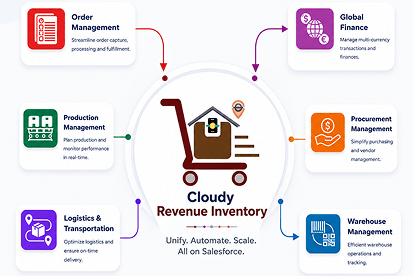
  Inventory Management
  Warehouse Management
  Order Management
  Vendor Management
  Logistics Management
  BOM Management
  Order Fulfillment
  Business Operations
  SaaS Platform for Operations
  Salesforce Cloud ERP Platform
  Xero
Xero
 Zoho books
 Quickbooks
 Shopify
 Acumatica
 SAP
SAP
 Odoo
Odoo
 NetSuite
 Microsoft Dynamics 365
 Sage
Sage


 Agentforce Revenue Management
 Agentforce Revenue Management + Billing
  Salesforce CPQ
 Salesforce Advanced Billing
  Migrate from CPQ to ARM
  Managed Services
 Salesforce Implementation
 Revenue Cloud Implementation
 ServiceNow Consulting Services
 Zoho CRM implementation
 MuleSoft Integration
 Workato Integration
 Microsoft
 Data Cloud
 Tableau
 ·
July 16, 2026
·
21 min read
·
July 16, 2026
·
21 min read