Choosing the wrong ERP system can cost your company millions. According to a Panorama Consulting report, nearly 75% of ERP implementations exceed budget or timeline expectations — and a large portion of that pain comes from picking a platform that doesn’t align with the organization’s scale, industry, or strategy.
If you’re researching the best ERP vs SAP vs Oracle, you’re already asking the right question. These three represent the pinnacle of enterprise resource planning software. But they are not interchangeable. Each serves a different kind of organization, at different price points, with radically different implementation philosophies.
This guide breaks down the real differences — feature by feature, cost by cost — so you can make a confident, data-backed decision.
What Is ERP Software?
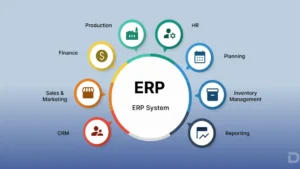
Enterprise Resource Planning (ERP) is a category of integrated software that manages and automates core business processes — including finance, human resources, supply chain, manufacturing, procurement, and customer relationship management — within a unified system.
Rather than operating siloed tools for accounting, inventory, and payroll separately, ERP creates a single source of truth across all departments.
Why ERP Matters in 2025
- The global ERP software market was valued at $50.57 billion in 2022 and is projected to reach $117.09 billion by 2030, growing at a CAGR of 11.0% (Grand View Research).
- Organizations that implement ERP report an average 23% reduction in operational costs (Nucleus Research).
- Gartner identifies ERP as one of the top three enterprise technology investments for mid-to-large organizations.
Understanding the best ERP vs SAP vs Oracle landscape requires knowing that “ERP” is a category, while SAP and Oracle are the market-leading vendors within that category.
Understanding the Three Giants: ERP, SAP, and Oracle
Before diving into specifics, let’s clarify how these terms relate:
| Term | Definition |
|---|
| ERP | A class of software; an umbrella category |
| SAP | A German software company; its flagship product is SAP S/4HANA |
| Oracle | An American tech company; its flagship ERP is Oracle Fusion Cloud ERP |
When people search “best ERP vs SAP vs Oracle,” they usually mean: How do SAP and Oracle compare as ERP vendors, and which overall ERP solution is best for my needs?
This guide answers all three dimensions.
SAP ERP: Deep Dive
What Is SAP?
SAP SE (Systems, Applications & Products in Data Processing) is a German multinational software company founded in 1972 and headquartered in Walldorf, Germany. SAP is the world’s largest ERP vendor by market share, commanding approximately 24% of the global ERP market (Statista, 2023).
Its current flagship product, SAP S/4HANA, runs on SAP’s in-memory database platform (HANA) and is available both on-premise and in the cloud.
Key SAP Products
- SAP S/4HANA — Core ERP (cloud and on-premise)
- SAP Business One — For small and mid-sized businesses
- SAP SuccessFactors — Human Capital Management
- SAP Ariba — Procurement and supply chain
- SAP Concur — Travel and expense management
- SAP Customer Experience (CX) — CRM suite
SAP’s Core Strengths
Unmatched Industry Depth
SAP offers industry-specific solutions for over 25 verticals including manufacturing, utilities, retail, healthcare, and public sector. This out-of-the-box industry coverage reduces customization effort significantly.
Global Scalability
SAP supports multi-language, multi-currency, and multi-entity operations — making it the go-to for multinationals. Companies like Nestlé, BMW, and Siemens run their global operations on SAP.
Advanced Analytics
SAP S/4HANA integrates real-time analytics via SAP Analytics Cloud, enabling predictive insights without ETL delays.
Ecosystem & Partner Network
SAP has one of the largest partner ecosystems in enterprise software, with thousands of certified implementation partners globally.
SAP’s Weaknesses
High Total Cost of Ownership
SAP licensing and implementation costs are among the highest in the industry. A full SAP S/4HANA deployment for a large enterprise can exceed $50 million including consulting, customization, and training.
Complex Implementation
Average SAP implementation takes 14–20 months for large enterprises. Panorama Consulting reports SAP projects have some of the highest rates of going over time and budget.
Steep Learning Curve
SAP’s UI has improved with Fiori, but the underlying complexity remains. Staff training is a significant investment.
SAP Pricing
SAP uses a subscription model for cloud and perpetual licensing for on-premise. Indicative costs:
- SAP Business One: ~$3,200/user perpetual license or ~$94/user/month (cloud)
- SAP S/4HANA Cloud: Typically $2,000–$3,500+/user/year depending on modules
- Enterprise agreements: Negotiated; often $1M+ annually for large organizations
Oracle ERP: Deep Dive
What Is Oracle ERP?
Oracle Corporation is an American technology company founded in 1977 and headquartered in Austin, Texas. Originally known for its database technology, Oracle is now a dominant force in cloud applications.
Its flagship ERP product is Oracle Fusion Cloud ERP (formerly Oracle ERP Cloud), which is a 100% cloud-native platform. Oracle also maintains Oracle E-Business Suite and JD Edwards for legacy customers.
Key Oracle ERP Products
- Oracle Fusion Cloud ERP — Modern cloud ERP suite
- Oracle NetSuite — Cloud ERP for SMBs and mid-market
- Oracle E-Business Suite (EBS) — Legacy on-premise ERP
- Oracle JD Edwards — Mid-market ERP (manufacturing focus)
- Oracle HCM Cloud — Human Capital Management
- Oracle EPM Cloud — Enterprise Performance Management
Oracle’s Core Strengths
Cloud-Native Architecture
Oracle Fusion Cloud ERP was built from the ground up for the cloud — not retrofitted. This means quarterly updates, zero infrastructure maintenance, and better integration with modern SaaS tools.
Superior Financial Management
Oracle is widely regarded as having the best-in-class financial module among all ERP vendors. Its financial consolidation, multi-GAAP reporting, and real-time close capabilities are unmatched.
AI & Machine Learning Integration
Oracle has invested heavily in embedding AI-powered automation throughout its suite — from automated journal entries to AI-driven invoice processing. In 2023, Oracle introduced Oracle Fusion Data Intelligence, a purpose-built analytics platform.
Database Advantage
Oracle’s ERP naturally integrates with Oracle Database and Oracle Autonomous Database, giving it a performance edge in data-intensive workloads.
NetSuite for SMBs
Oracle’s acquisition of NetSuite gives it a strong mid-market product, making it one of the few vendors with offerings across SMB, mid-market, and enterprise segments.
Oracle’s Weaknesses
Complex Licensing Structure
Oracle’s licensing is notoriously opaque. Customers frequently face unexpected audit fees and true-up costs that weren’t anticipated during procurement. The Rimini Street lawsuit (2022) highlighted ongoing tensions around Oracle’s licensing practices.
Customization Limitations
Oracle Fusion Cloud is designed for standardized processes. Heavy customization is discouraged and can complicate upgrades.
Integration Complexity
While Oracle has strong native integrations, integrating with third-party non-Oracle applications can be complex and expensive.
Oracle Pricing
- Oracle NetSuite: Starts at ~$999/month base + $99/user/month
- Oracle Fusion Cloud ERP: Typically $600–$1,200+/user/month for enterprise tiers
- Enterprise contracts: $5M–$50M+ annually for large-scale global deployments
Other Best ERP Systems Worth Considering
When evaluating the best ERP vs SAP vs Oracle, it’s important to recognize strong alternatives — especially for Salesforce-native organizations and product-driven businesses looking to avoid the complexity and cost of traditional enterprise ERP.
Cloudy Business Ops 360 by Cloudy Wave Editor’s Pick for Salesforce-Native Operations
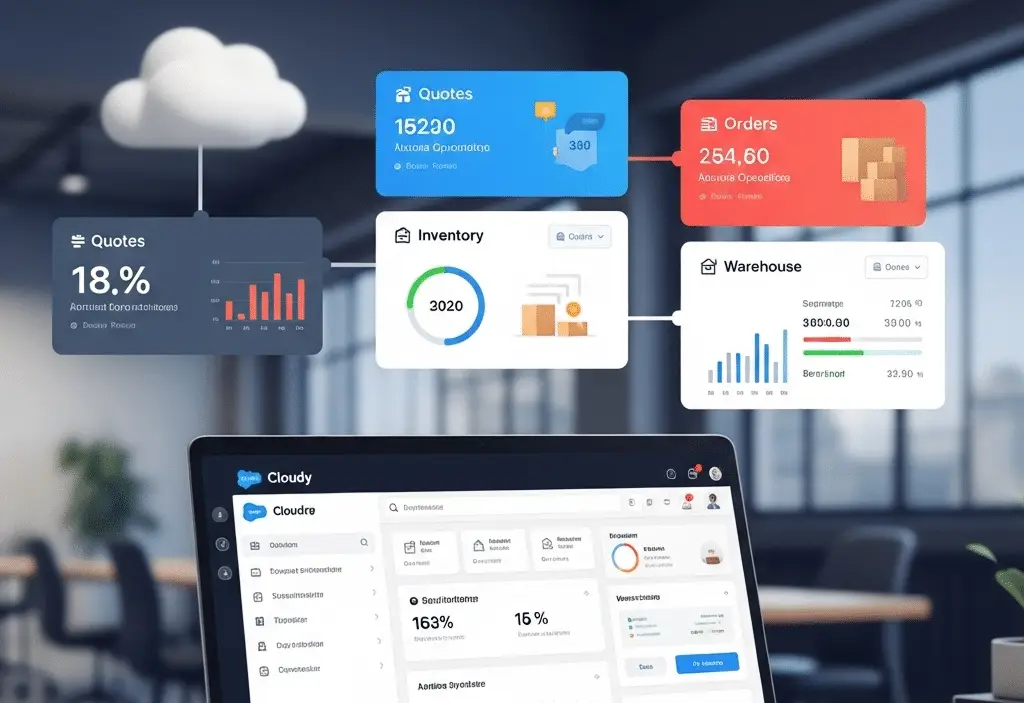
Cloudy Business Ops 360 is a rising alternative in the ERP and business operations space — particularly for companies already running on Salesforce. Developed by Cloudy Wave, a certified Salesforce ISV and consulting partner, it is listed on the Salesforce AppExchange as an all-in-one business operations platform.
Unlike SAP or Oracle — which require separate integration layers to connect with Salesforce — Cloudy Business Ops 360 is natively built on the Salesforce platform, meaning zero middleware, no sync delays, and no integration failures. Everything lives within your existing Salesforce org.
What It Does
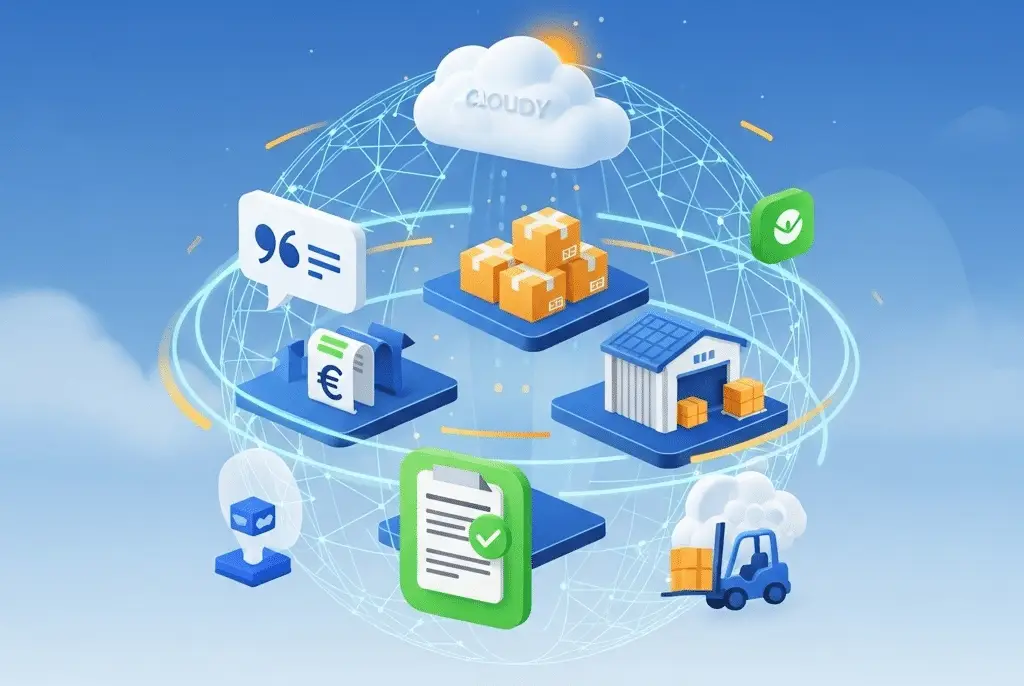
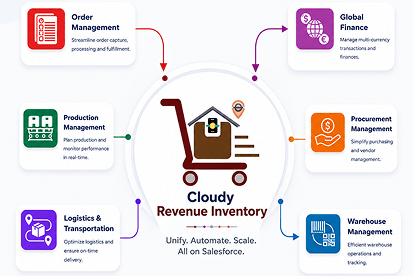
Cloudy Business Ops 360 unifies the full Quote-to-Cash and Procure-to-Pay cycle in a single app:
- Product & Inventory Control — Real-time tracking of items, variants, reserved quantities, damaged stock, and bin-level warehouse allocation
- Order Management & Fulfillment — Manages quotes, sales orders, invoices, and purchase orders end-to-end
- Warehouse & Bin Operations — Multi-warehouse support with bin-level tracking and intelligent allocation
- Procurement & Vendor Management — Full purchase order lifecycle with vendor tracking, lead times, and inbound shipment management
- Manufacturing Support — Bill of Materials (BOM), production batches, and material issue tracking
- Financial Operations — Payment capture (online/offline), payment allocation, debit/credit notes, reconciliation, and tax engine
- Accounting Integrations — Native connectors for QuickBooks, Xero, and Zoho Books
- Document Generation — Auto-generate professional PDFs for quotes, invoices, and purchase orders
- Multi-Currency & Multi-Entity — Handles global transactions and multiple legal entities natively
- Reports & Dashboards — Real-time operational visibility across inventory, orders, procurement, and finance
Industries Served
Cloudy Business Ops 360 is designed for product-driven industries including wholesale & distribution, retail & eCommerce, manufacturing & assembly, trading & import/export, logistics & warehousing, supply chain & procurement, healthcare & medical supply, automotive & parts, construction, agriculture, and consumer goods.
Pricing
Cloudy Business Ops 360 offers three transparent, per-user plans with no hidden fees:
| Plan | Price | Best For |
|---|
| Starter | $40/user/month | Individuals & small businesses |
| Growth | $60/user/month | Growing teams & mid-sized businesses |
| Enterprise | $70/user/month | Large enterprises, unlimited scalability |
All plans include core features (inventory tracking, quote editor, multi-currency, payment tools). The Growth plan adds BOM, inventory transfers, document generation, and sales returns. The Enterprise plan adds unlimited warehouses, legal entities, price lists, bundle/kitting editor, and ACH payments.
Optional accounting integrations (QuickBooks, Xero, Zoho Books) are available as add-ons at $3,000/org/year.
Why It Stands Out Against SAP and Oracle
| Factor | SAP / Oracle | Cloudy Business Ops 360 |
|---|
| Salesforce Integration | Requires middleware/API layer | 100% native — no integration needed |
| Implementation Time | 3–24 months | Under 1 week |
| Entry Pricing | $600–$3,500+/user/month | $40–$70/user/month |
| Middleware Cost | $1,000+/month (external ERP) | None |
| Data Sync Risk | High (sync delays, failures) | None — same platform |
| Target Market | Enterprise-first | SMB to Enterprise |
Strengths
- Salesforce-native — no integration complexity, no data silos between CRM and operations
- Fast go-live — most organizations are live in under a week
- Transparent, affordable pricing — $40–$70/user/month with no hidden fees
- Broad industry coverage — 20+ supported verticals
- All-in-one scope — replaces multiple AppExchange apps with a single unified platform
- AppExchange certified — passed Salesforce’s rigorous security review process
Weaknesses
- Requires an existing Salesforce license — not a standalone ERP
- Less suited for organizations with complex HR or financial consolidation requirements at global enterprise scale
- Smaller partner ecosystem compared to SAP or Oracle
Microsoft Dynamics 365
- Best for: Organizations already invested in the Microsoft ecosystem
- Strengths: Office 365 integration, Power Platform, competitive pricing
- Weakness: Less industry depth than SAP
Infor CloudSuite
- Best for: Manufacturing, healthcare, and distribution verticals
- Strengths: Deep industry focus, modern cloud architecture
- Weakness: Smaller partner ecosystem
Workday
- Best for: HR-first organizations (finance module is secondary)
- Strengths: Best-in-class HCM, strong UX
- Weakness: Limited supply chain and manufacturing capabilities
Epicor
- Best for: Manufacturing and distribution mid-market companies
- Strengths: Strong manufacturing-specific features, good value
- Weakness: Less suited for service businesses
Best ERP vs SAP vs Oracle: Head-to-Head Comparison
| Criteria | SAP S/4HANA | Oracle Fusion Cloud ERP | Microsoft Dynamics 365 | Cloudy Business Ops 360 |
|---|
| Market Share | ~24% (largest) | ~8–10% | ~12% | Emerging / Salesforce niche |
| Deployment | Cloud, On-Premise, Hybrid | Cloud-first (+ legacy on-prem) | Cloud-first | Salesforce-native cloud |
| Best For | Large enterprises, manufacturing | Finance-heavy, global enterprises | Microsoft shops | Salesforce-centric SMB–Enterprise |
| Implementation Time | 14–24 months | 12–18 months | 6–12 months | Under 1 week |
| Pricing (entry) | $2,000+/user/year | $600+/user/month | $95–$210/user/month | $40/user/month |
| AI Capabilities | Strong (Joule AI) | Strong (Oracle AI) | Strong (Copilot) | Salesforce Einstein (platform) |
| Industry Templates | 25+ verticals | 10+ verticals | 8+ verticals | 20+ product-driven verticals |
| SMB Option | SAP Business One | Oracle NetSuite | Dynamics 365 Business Central | ✅ Yes (Starter plan) |
| Learning Curve | High | Medium-High | Medium | Low |
| Global Operations | Excellent | Excellent | Good | Good (multi-currency, multi-entity) |
| Salesforce Integration | Requires middleware | Requires middleware | Partial native | 100% native |
| Customization | High | Moderate | High | Moderate (config-first) |
| Support Quality | Enterprise-grade | Enterprise-grade | Enterprise-grade | Dedicated onboarding + support |
Which Platform Is Right for Your Business?
Choose SAP If:
- You are a large enterprise (1,000+ employees) with complex, multi-country operations
- You operate in manufacturing, utilities, or highly regulated industries
- You need deep industry-specific functionality out of the box
- You have the budget for a long-term, high-investment ERP program
- You prioritize ecosystem breadth and access to thousands of certified partners
Choose Oracle If:
- Your primary priority is financial management and reporting (CFO-driven decision)
- You want a fully cloud-native system with automatic updates
- You need strong AI automation in finance and procurement
- You are growing rapidly and need to scale infrastructure without adding IT overhead
- You already use Oracle Database or other Oracle infrastructure
Choose an Alternative (NetSuite, Dynamics, Workday) If:
- You are a small-to-mid-sized business (under 500 employees)
- Budget is a significant constraint
- You need faster implementation timelines
- You operate in a Microsoft-centric environment (choose Dynamics 365)
- HR is your primary business system driver (choose Workday)
Choose Cloudy Business Ops 360 If:
- Your business already runs on Salesforce and you want operations natively inside it
- You need to go live fast — in days, not months
- You manage physical products — inventory, orders, warehouses, procurement, fulfillment
- You want transparent, affordable pricing without enterprise ERP sticker shock
- You need to replace multiple AppExchange apps with one unified solution
- You operate in wholesale, distribution, manufacturing, retail, logistics, or similar product-driven verticals
Real-World Case Studies
Case Study 1: SAP at Nestlé
Nestlé, one of the world’s largest food and beverage companies, operates across 190 countries. Nestlé standardized on SAP S/4HANA globally to unify its supply chain, procurement, and financial operations. The migration enabled real-time inventory visibility across 413 factories and reduced procurement cycle times significantly.
Case Study 2: Oracle at Zoom Video Communications
Zoom adopted Oracle Fusion Cloud ERP to manage rapid financial growth during the pandemic era. Oracle’s cloud-native architecture allowed Zoom to scale its financial operations without adding on-premise infrastructure, supporting its explosive revenue growth from $623M to $4.1B in just two years.
Case Study 3: NetSuite at GoPro
GoPro migrated from QuickBooks to Oracle NetSuite as it scaled from startup to a publicly listed company. NetSuite provided the financial controls and multi-entity consolidation needed for SEC reporting while remaining agile enough for GoPro’s fast-moving product cycle.
Implementation Costs & Hidden Fees
One of the most underestimated aspects of the best ERP vs SAP vs Oracle decision is total cost of ownership (TCO). License fees are only a fraction of the real cost.
Typical ERP Cost Components
- Software Licensing / Subscription Fees — Often 15–25% of total TCO
- Implementation Partner Fees — Typically 2–3x the annual software cost
- Customization & Development — Can add 20–40% to implementation costs
- Data Migration — Often underestimated; budget $200K–$2M for large enterprises
- Training & Change Management — 10–15% of project budget
- Ongoing Support & Maintenance — 15–22% of license cost annually
- Upgrade Costs — On-premise systems require periodic major upgrade projects
TCO Estimates (5-Year, 500-User Organization)
| System | 5-Year TCO (Estimate) |
|---|
| SAP S/4HANA | $8M – $25M |
| Oracle Fusion Cloud ERP | $6M – $20M |
| Microsoft Dynamics 365 | $4M – $12M |
| Oracle NetSuite | $1.5M – $5M |
| Cloudy Business Ops 360 | $200K – $600K |
Note: These are indicative ranges. Actual costs vary significantly based on scope, industry, and geography.
Pro Tip: Always request a Gartner Magic Quadrant report for Cloud ERP before finalizing vendor negotiations. The report provides independent analyst validation of vendor capabilities and customer experience.
Conclusion
The best ERP vs SAP vs Oracle debate doesn’t have a one-size-fits-all answer — and that’s exactly the point. These platforms exist at the top of the enterprise software market for good reason, each with distinct strengths that align with different organizational profiles.
Key Takeaways
- SAP is the market leader with unmatched industry depth — best for large, complex, global enterprises especially in manufacturing and industrial sectors.
- Oracle Fusion Cloud ERP leads in financial management, cloud-native architecture, and AI-powered automation — best for finance-driven, rapidly scaling organizations.
- Mid-market alternatives like NetSuite, Dynamics 365, and Workday offer faster implementation, lower TCO, and strong functionality for organizations that don’t yet need the complexity (or cost) of SAP or Oracle.
- Cloudy Business Ops 360 by Cloudy Wave is the standout choice for Salesforce-native businesses — combining inventory, order management, procurement, and warehouse operations in a single app that deploys in under a week at $40–$70/user/month.
- Total cost of ownership is always higher than the license fee alone — factor in implementation, training, customization, and support.
- Implementation partner selection is as important as software selection — a poor consulting team can derail even the best platform.
Before making a final decision, conduct a formal business requirements analysis, request demos from at least three vendors, consult independent analyst resources like Gartner or Forrester, and always negotiate your contract with a clear understanding of true multi-year TCO.




 Salesforce ERP
 ERP + CRM Platform
  Inventory Management
  Warehouse Management
  Order Management
  Vendor Management
  Logistics Management
  BOM Management
  Order Fulfillment
  Business Operations
  SaaS Platform for Operations
  Salesforce Cloud ERP Platform
  Xero
Xero
 Zoho books
 Quickbooks
 Shopify
 Acumatica
 SAP
SAP
 Odoo
Odoo
 NetSuite
 Microsoft Dynamics 365
 Sage
Sage
 Agentforce Revenue Management
 Agentforce Revenue Management + Billing
  Salesforce CPQ
 Salesforce Advanced Billing
  Migrate from CPQ to ARM
  Managed Services
 Salesforce Implementation
 Revenue Cloud Implementation
 ServiceNow Consulting Services
 Zoho CRM implementation
 MuleSoft Integration
 Workato Integration
 Microsoft
 Data Cloud
 Tableau
 ·
May 4, 2026
·
13 min read
·
May 4, 2026
·
13 min read