




 Salesforce ERP
 ERP + CRM Platform
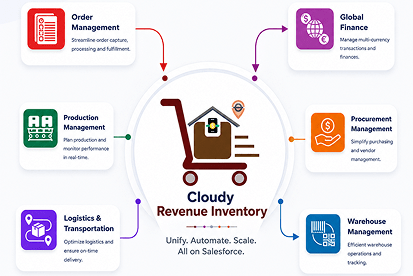
 Inventory Management
 Warehouse Management
 Order Management
 Vendor Management
 Logistics Management
 BOM Management
 Order Fulfillment
 Business Operations
 SaaS Platform for Operations
 Salesforce Cloud ERP Platform
 Xero
 Zoho books
 Quickbooks
 Shopify
 Acumatica
 SAP
 Odoo
 NetSuite
 Microsoft Dynamics 365
 Sage



 Agentforce Revenue Management
 Agentforce Revenue Management + Billing
 Salesforce CPQ
 Salesforce Advanced Billing
 Migrate from CPQ to ARM
 Managed Services
 Salesforce Implementation
 Revenue Cloud Implementation
 ServiceNow Consulting Services
 Zoho CRM implementation
 MuleSoft Integration
 Workato Integration
 Microsoft
 Data Cloud
 Tableau
Salesforce Commerce Cloud
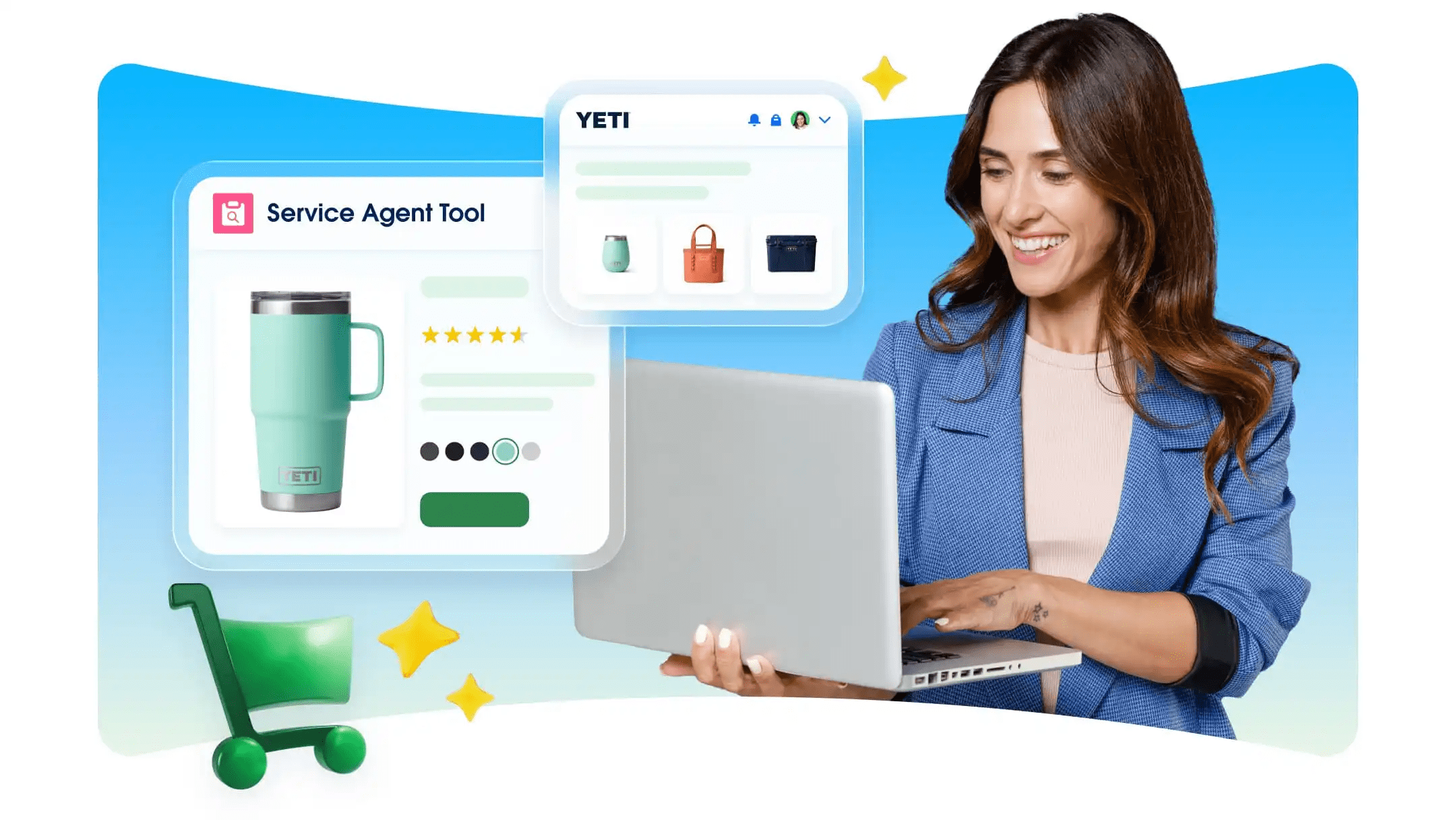
Salesforce Commerce Cloud that converts. Everywhere you sell.
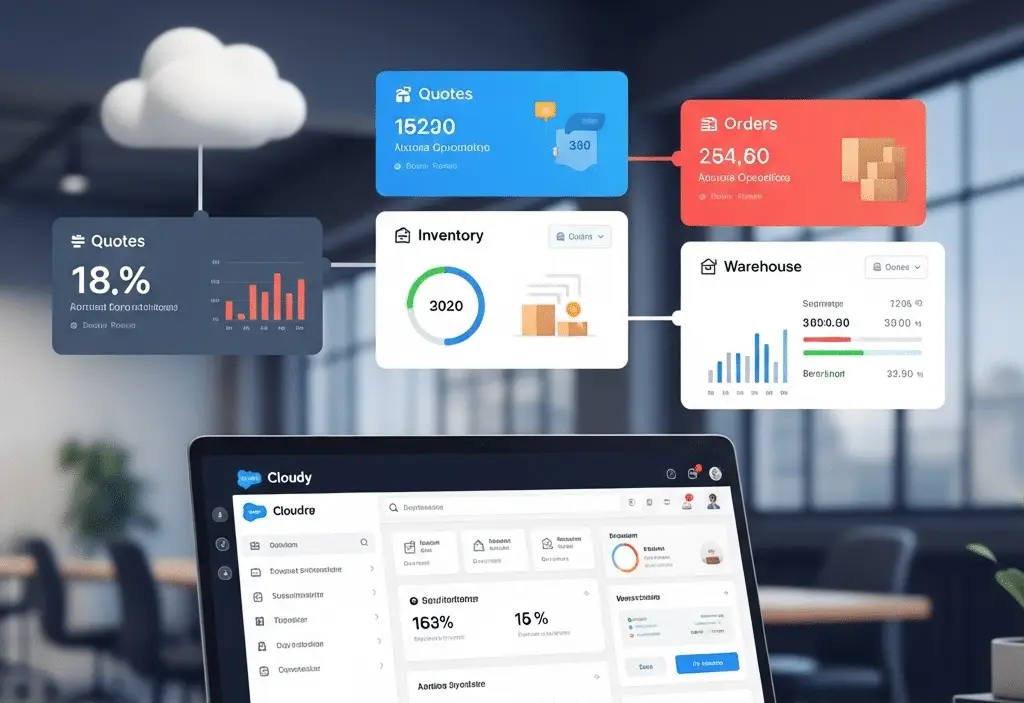
Salesforce Commerce Cloud is a cloud-based ecommerce platform for B2B, B2C, and D2C businesses. It connects commerce with CRM, order management, payments, and customer data to launch faster, personalize experiences, and scale efficiently. Cloudy Wave helps businesses implement Salesforce Commerce Cloud for smarter, connected commerce.
B2B Commerce
B2C Commerce
Order Management
Payments & Checkout
99.9%Historical uptime during peak events
Trusted by Leading Companies
Our Globally 80+ Clients.













What is Salesforce Commerce Cloud?
One platform. Every commerce experience.
Salesforce Commerce Cloud, now known as Agentforce Commerce, is Salesforce’s cloud-based commerce platform for B2B, B2C, and D2C businesses. It connects ecommerce, customer data, order management, payments, and AI-powered experiences to help businesses create connected shopping journeys across digital channels.
Unlike standalone ecommerce platforms, Salesforce Commerce Cloud connects commerce with Salesforce CRM and other Salesforce applications, giving teams a unified view of customers, products, orders, and interactions. This connected architecture supports personalized shopping experiences, streamlined fulfillment, and integrated customer engagement.
- B2B, B2C, and D2C commerce on connected Salesforce platforms
- AI-powered personalization and guided shopping for relevant product discovery
- Composable and flexible storefront experiences for modern digital commerce
- Order Management for connected post-purchase and fulfillment processes
- Native Salesforce CRM integration connecting commerce and customer data
- Scalable cloud infrastructure designed to support global commerce operations
- Integrated payments and checkout for streamlined transactions
Salesforce Commerce Cloud Models
One platform. Every way you sell.
Salesforce Commerce Cloud supports B2C, B2B, D2C, and headless commerce models on a connected platform. Businesses can create personalized storefronts, manage complex buying journeys, sell directly to customers, and build flexible headless commerce experiences.

B2C Commerce
Salesforce B2C Commerce helps brands create personalized, scalable ecommerce experiences across web and digital channels. Use AI-powered product discovery, merchandising, promotions, multilingual and multicurrency capabilities, and streamlined checkout to improve customer experiences and conversions.

B2B Commerce
Salesforce B2B Commerce supports complex business buying journeys with self-service storefronts, account-specific pricing, product catalogs, bulk ordering, and purchasing workflows. It helps businesses simplify online ordering while delivering personalized experiences for B2B buyers.

D2C Commerce
Salesforce D2C Commerce enables brands to sell directly to consumers through connected digital storefronts. Businesses can control the customer experience, strengthen first-party customer relationships, and connect commerce data with Salesforce CRM for more personalized engagement.
Headless Commerce
Salesforce headless commerce gives businesses flexibility to build custom storefront experiences while connecting them to Salesforce commerce capabilities. A composable approach separates the frontend experience from backend commerce services, supporting faster development and greater design flexibility.
The Three Pillars of Salesforce Commerce Cloud
Storefront. Intelligence. Fulfilment.
Salesforce Commerce Cloud brings storefront experiences, AI-powered commerce intelligence, and connected fulfillment together to help businesses turn browsers into buyers and one-time customers into repeat customers.

Pillar 1
Storefront, Merchandising & Shopping Experience
Salesforce Commerce Cloud gives merchants the tools to build, manage, and optimize personalized storefront experiences without relying on developers for every change. From page design and product catalogs to promotions and omnichannel shopping, businesses can manage commerce experiences from a centralized platform.
- Composable Storefront: Build React-based, headless storefronts with flexible experiences, fast page loads, and modern web performance.
- Page Designer: Create and manage landing pages, category pages, promotional content, and storefront layouts with drag-and-drop tools.
- Product & Catalog Management: Manage products, pricing, bundles, and inventory across multiple sites, regions, currencies, and catalogs.
- Promotions Engine: Configure coupons, tiered discounts, BOGO offers, loyalty rewards, and cart-level incentives without custom development.
- Endless Aisle & In-Store Commerce: Connect online and physical inventory to support click-and-collect, ship-from-store, and endless-aisle purchasing.
- Social Commerce: Connect product feeds with social channels such as Instagram, Facebook, and TikTok to turn social engagement into shopping experiences.

Pillar 2
Einstein AI, Agentforce & Personalization
Salesforce Commerce Cloud uses AI to personalize the shopping journey, from product discovery and search to pricing, promotions, and customer service. Einstein AI helps businesses deliver relevant experiences, while Agentforce Commerce enables AI-powered agents to assist shoppers in real time.
- Einstein Product Recommendations: Uses product, pricing, and customer data to personalize product recommendations, catalogs, promotions, and search results for individual shoppers.
- Einstein Predictive Search: Uses shopper intent and behavior to surface relevant products, handle misspellings and natural-language queries, and improve search results in real time.
- Einstein Copilot for Merchandising: Helps merchants use natural-language prompts to create SEO-friendly product pages, localized content, merchandising experiences, and pricing configurations more efficiently.
- Agentforce Commerce Agents: AI-powered commerce agents can help shoppers find products, answer questions, navigate the storefront, and support tasks such as returns and order inquiries.
- A/B Testing & Optimization: Test storefront layouts, product placements, promotions, and search configurations to identify opportunities for improving engagement and conversion performance.
- First-Party Data Activation: Salesforce’s data and AI capabilities can use customer data to support personalized recommendations and commerce experiences while maintaining appropriate data governance.

Pillar 3
Order Management, Fulfilment & CRM Integration
Salesforce Commerce Cloud connects commerce beyond checkout, linking order management, fulfillment, CRM, service, marketing, and business systems. Its connected commerce architecture helps businesses track orders throughout the customer journey while giving teams better visibility across sales, service, inventory, and fulfillment.
- Salesforce Order Management: Track orders from placement through picking, packing, shipping, and delivery, with order-status visibility and support for exceptions and fulfillment workflows.
- Service Cloud Integration: Connect order information with Service Cloud so service teams can access customer and order history when resolving commerce-related issues.
- Sales Cloud Integration: Connect purchase and customer data with Sales Cloud to give sales teams greater visibility into buying activity, accounts, and customer relationships.
- Marketing Cloud Integration: Use commerce and customer data to support abandoned-cart campaigns, post-purchase journeys, personalized engagement, and loyalty programs.
- ERP & WMS Integration: Connect Salesforce Commerce Cloud with ERP and warehouse management systems to synchronize inventory and support accurate stock visibility across digital and physical channels.
- B2B eProcurement Integration: Support B2B purchasing workflows by connecting commerce storefronts with supported eProcurement platforms, helping business buyers move from procurement systems to online ordering.
Key Salesforce Commerce Cloud Capabilities
Every Salesforce Commerce Cloud feature Cloudy Wave configures for you

B2C Storefront Launch
Launch Salesforce B2C Commerce storefronts with mobile-first, conversion-focused experiences, product catalogs, checkout, payment gateways, promotions, and multilingual or multicurrency support.

B2B Buyer Portal
Build Salesforce B2B Commerce buyer portals with account-specific catalogs, contract pricing, bulk ordering, PO-based payments, approval workflows, and requisition lists for self-service purchasing.

Composable & Headless Commerce
Implement Salesforce Commerce Cloud headless and composable storefronts using flexible frontend architectures, including PWA-based experiences, while connecting commerce capabilities to the backend.

Einstein AI & Agentforce
Use Salesforce Commerce Cloud AI capabilities including product recommendations, predictive search, merchandising assistance, testing and optimization, and Agentforce-powered shopping experiences.

Order Management (OMS)
Configure Salesforce Order Management to manage orders from placement through picking, packing, shipping, and delivery, with support for click-and-collect, ship-from-store, endless aisle, returns, and order-status visibility.

Payment Gateway Integration
Integrate Salesforce Commerce Cloud with payment providers and payment methods to support secure checkout, saved payment options, digital wallets, and flexible payment experiences.

Social Commerce
Connect Salesforce Commerce Cloud with social commerce channels to create shoppable experiences across platforms such as Instagram, Facebook, and TikTok, turning social engagement into commerce opportunities.

ERP & WMS Integration
Connect Salesforce Commerce Cloud with ERP and WMS systems to synchronize inventory, orders, and fulfillment data, helping maintain accurate stock visibility across sales channels.

Platform Migration
Migrate ecommerce platforms to Salesforce Commerce Cloud from platforms such as Shopify, Magento, Hybris, or WooCommerce while transferring relevant product, customer, order, and SEO data.

Who Benefits from Salesforce Commerce Cloud?




Built for every team in your commerce operation
Salesforce Commerce Cloud supports every team involved in digital commerce, from ecommerce managers and merchandisers to developers, architects, and marketing teams. It provides connected tools for managing storefronts, products, promotions, customer engagement, and commerce data across the customer journey.
eCommerce Managers
Salesforce Commerce Cloud helps ecommerce managers monitor storefront performance, manage A/B tests and promotions, and track conversion metrics through real-time commerce dashboards. Connected commerce data helps teams understand performance across the customer journey.
Merchandisers
Salesforce Commerce Cloud gives merchandisers tools to manage product listings, catalogs, pricing, and promotions. Page Designer and merchandising capabilities help teams create and update storefront content without requiring developer support for every change.
Developers & Architects
Salesforce Commerce Cloud gives developers and architects flexible options for building modern commerce experiences. Teams can work with composable and headless storefront architectures, extend commerce functionality, and integrate Salesforce with ERP, WMS, payment, and other business systems.
Marketing Teams
Salesforce Commerce Cloud helps marketing teams connect commerce data with customer engagement. Teams can support abandoned-cart recovery, post-purchase journeys, loyalty initiatives, and personalized campaigns using relevant commerce and customer data.
Salesforce Commerce Cloud Services
Salesforce Commerce Cloud services built around your business
Cloudy Wave provides Salesforce Commerce Cloud implementation, integration, customization, AI, and migration services for B2B, B2C, D2C, and headless commerce. We connect storefronts, customer data, orders, payments, inventory, and fulfillment to create a connected commerce experience.
Salesforce B2C Commerce Implementation
Launch mobile-first B2C storefronts with product catalogs, checkout, payments, promotions, responsive experiences, and multilingual or multicurrency commerce capabilities.
Salesforce B2B Commerce Implementation
Build self-service B2B buyer portals with account-specific catalogs, contract pricing, bulk ordering, purchase-order workflows, approvals, requisition lists, and eProcurement integrations.
Composable & Headless Commerce
Build flexible Salesforce Commerce Cloud storefronts using composable and headless architectures, including PWA-based experiences, while connecting custom frontends with commerce services.
Commerce AI & Agentforce
Configure AI-powered product recommendations, predictive search, merchandising capabilities, testing and optimization, and Agentforce-powered shopping experiences.
Salesforce Order Management
Manage orders from placement through fulfillment and delivery with order tracking, click-and-collect, ship-from-store, endless aisle, returns, and connected fulfillment workflows.
Payment Gateway Integration
Connect Salesforce Commerce Cloud with payment providers and digital payment methods to support secure checkout, flexible payment options, and connected transaction experiences.
Social Commerce
Extend Salesforce Commerce Cloud into social channels with product-focused experiences across platforms such as Instagram, Facebook, and TikTok to connect social engagement with commerce.
ERP & WMS Integration
Connect Salesforce Commerce Cloud with ERP and WMS platforms to synchronize inventory, orders, fulfillment, and operational data across digital and physical sales channels.
Salesforce Commerce Cloud Migration
Migrate from Shopify, Magento, Adobe Commerce, Hybris, or WooCommerce to Salesforce Commerce Cloud, with planning for product, customer, order, catalog, and SEO-related data.
Products Feedback
What Our Customers Say

A Reliable Salesforce Developer Helping Scale and Streamline Operations
Working with Prakash has been a highly positive experience for our business. Their expertise has helped us streamline processes, improve operational efficiency, and build a more scalable CRM environment tailored to our specific business needs. From automation and workflow improvements to custom development and reporting, they have consistently delivered practical solutions that reduce manual work and improve visibility across the business. One of the biggest strengths has been their ability to create flexible, scalable solutions that support future growth while remaining user-friendly for the wider team. They are proactive, responsive, and able to quickly understand business objectives before implementing effective technical solutions. Having a dependable Salesforce developer who understands both the technical and commercial side of a business is incredibly valuable, and we would highly recommend their services to any organisation looking to improve and modernise their Salesforce environment.
More innovation from CloudyWave
We have enjoyed incredible support from the CloudyWave team over the years, and I'm excited to see this latest development. The app has an extraordinary scope of capability, rivalling the big standalone ERP systems, and pairing this new capability with everything that comes with the native user-friendly features of the Salesforce ecosystem.
Built in ERP to Salesforce, awesome set of objects, outstanding Service, Integration Made easy
As an Australian manufacturer seeking any competitive edge in productivity gains and visibility of data central to making better business decisions, this app install within Salesforce instance for us has been a gamechanger. We were managing everything with disjointed apps and logins for the team, and manual handling with spreadsheets and what was in peoples' heads! Now it is within centralised source of truth for our business. Better Data, means better decisions, Cloudywave helped us achieve this, couldn't recommend the team and offering highly enough, having used integration partners before to install ERP type offerings, their service has been exceptional.
Game-Changer for Complex Inventory & High-Touch Support
We implemented Cloudy Business Ops 360 for a seed farm with a massive catalog of products and variants. The complexity of our inventory was a major hurdle, but the team at Cloudy was extremely professional and supportive from day one. What truly sets them apart is their willingness to tailor the product to our specific needs. Any time our users asked us for a new type of functionality, we were never met with "no." The team at Cloudy Business Ops was quick to understand our requirements and use cases and provide a solution. When we required custom development and new features to bridge the gaps, they delivered high-quality results quickly and at a very reasonable cost. Thanks to their team going above and beyond to ensure a smooth implementation, we now have our entire inventory and order operations running seamlessly within Salesforce. Having these insights directly in our CRM has empowered our sales team and streamlined our entire business. I couldn’t recommend this product or this team more!
A truly complete and well designed app
Having worked with several projects where the client required Salesforce to manage Products and deal in a busy B2B environment I was always disappointed with the add on offerings available as the seemed to make simple tasks complex. However, 360 has taken all the negative customer experiences and designed a very clean and clear UI that is really easy to use and covers every base. The team have used there long term experience building custom solutions for clients and rolled all of that up into a package that delivers massive functionality. Managing Products, stock, inventory, messaging clients, billing etc are all covered, and at a fraction of the price of competing products. This is a really great tool.
Replaced Our Spreadsheet Chaos With One Native Platform
We were running our operations across Salesforce, Xero, a handful of spreadsheets, and a separate inventory tool that never quite talked to each other. Quotes took ages, order handoffs were manual, and our team was double-entering data every single day. Cloudy Business Ops 360 changed that for us. Everything now lives inside Salesforce quoting, orders, subscriptions, inventory, and billing all in one place. The team picked it up quickly because it feels like native Salesforce, not a bolted-on app. What stood out most was the implementation support. Cloudy Wave team genuinely understood our business before configuring anything. They didn't try to sell us modules we didn't need they helped us start with what mattered and grow from there. If you're a growing business using Salesforce and tired of stitching tools together, this is well worth a proper look.